As we approach the exam season, I am deeply reminded of how the process impacts the entire family. This year, I’ve had a clear insight into the family dynamics, watching my niece, Caitlyn, prepare for her exams. She’s working hard for the grades she needs to achieve her goal of becoming a vet.
I imagine this is a familiar scenario for any family heading towards exams. It isn’t just the teenager who is focused on them, but they are the ones who ultimately have to sit them. For the rest of the family, the anxiety often stems from a lack of power over the outcome
The Trap of Spending Money
This anxiety often manifests as spending money. When I start working with students, I’m often presented with pristine revision guides they’ve accumulated but not used, or they confess they’ve signed up to multiple online study sites and forgotten the login details.
The reality is, having all the right equipment is not the same as having a plan. It’s a lot like my own home gym. I have wonderful equipment and plenty of experience, but if I’m left to my own devices, I often tell myself, “I must use this, but not right now,” for months on repeat.
We cannot reasonably expect our teenagers, with all the pressure and hope riding on their exams, to be any better at holding themselves consistently accountable. They just won’t.
What Students Really Need
After 15 years of supporting students through this process, I know exactly what to expect and how to prepare. The most powerful tools I can provide are accountability, support, and bite-sized deadlines.
Just as my own exercise journey changes when I have a trainer in my corner, the students I work with thrive when they have structured guidance. The satisfaction of turning overwhelming stress into a clear, actionable plan never gets old.
This kind of planned support is vital because we need to manage stress effectively. A little stress is motivational and can drive students forward. However, too much stress leads to overwhelm, shutdown, reduced functioning, and a lower immune system. My goal is to keep them motivated and prevent them from hitting that peak-stress final hurdle without the energy to clear it.
Get the Study Success Plan You Need—For Free
You don’t need another pricey revision guide or a forgotten subscription. You need a simple, effective plan and the tools to support your child without adding to their burden.
I want to put my 15 years of experience into your hands. That’s why I created the Study Success Programme. This is a free programme designed to:
Teach students the essential study skills they need for exams.
Share with parents like you exactly how you can best support your child through the process.
Stop feeling powerless over the outcome. Sign up for the free Study Success Programme today, and let’s work together to turn overwhelm into a clear, confident path to the 2027 exams.
As we approach the exam season, I am deeply reminded of how the process impacts the entire family. This year, I’ve had a clear insight into the family dynamics, watching my niece, Caitlyn, prepare for her exams. She’s working hard for the grades she needs to achieve...
A Guide for Parents and Tutors Love it or loathe it, AI in education is taking the digital world by storm—and it’s not going anywhere. But don’t worry; it’s not as scary as it sounds. Used the right way, AI in education can be a brilliant tool to make life easier for...
Without the pressure of exams or major school changes, Year 9 often flies under the radar. However, it’s a transformative year where students begin to explore who they are, both academically and socially. At 13-14 years old, teenagers experience significant changes in...
In this video, Cai Graham and I discuss effective strategies and expert STEM tutoring to boost learning and reduce exam stress. As we entered into 2023, I had an insightful discussion with Cai Graham, an expert in...
In today's fast-paced world, efficiency is key. When it comes to learning, spending endless hours revising can be a drain on both time and productivity. But what if there was a way to master the art of efficient learning, allowing you to spend less time revising while...
Without having sat GCSEs before, it is difficult for students to know what 'prepared' looks like. As time ticks on, the pressure increases, and the best way to reduce it is to take positive action. So here are my tips for some things you can do today and going forward...
The Physics Aptitude Test is required by Oxford for Physics, Engineering, and Materials Science courses. Our course prepares students with small-group live sessions, problem-solving strategies, and confidence-boosting support.
7 live sessions led by Natalie, our specialist physics tutor
Pre-work to build skills and confidence
Weekly support and Q&A
Natalie’s tried and tested course schedule will ensure you are fully prepared for the Physics Admissions Test.
The course is £200 paid in full, or £120 if you join before 26th July.
By signing up early you can save £80 (40%!) of the course price.
Why?
Early sign-ups allow us to confidently set the time aside, as Natalie’s calendar is in high demand.
Pre-course dates
Early waitlist
21/06/2025
Open cart
19/07/2025
Early bird offer closes
26/07/2025
Increase outreach
09/08/2025
Close cart
23/08/2025
Start programme
06/09/2025
Course dates
Programme dates
Day
Date
Time
Focus
Pre-work shared
Saturday
30/08/2025
09:00
Session 1
Saturday
06/09/2025
10am – 1pm
Physics
Session 2
Sunday
07/09/2025
10am – 1pm
Maths
Session 3
Wednesday
10/09/2025
5 – 6.30pm
Exam questions and exam technique
Session 4
Wednesday
17/09/2025
5 – 6.30pm
Physics and exam questions
Session 5
Wednesday
24/09/2025
5 – 6.30pm
Maths and exam questions
Session 6
Wednesday
01/10/2025
5 – 6.30pm
Exam questions
Session 7
Wednesday
08/10/2025
5 – 6.30pm
Exam questions
Your questions answered
What is the PAT?
The Physics Aptitude Test (PAT) is an entrance exam for Physics, Engineering, and Materials Science at Oxford University. It tests problem-solving, logic, and maths skills in a two-hour paper.
Who is this course for?
Year 12–13 students planning to apply for Physics, Engineering, or related courses at Oxford.
Why does the course cover both Physics and Maths?
Because the PAT blends physics concepts with maths problem-solving. A strong grasp of maths is essential for success.
What’s included in the course?
7 live small-group sessions with an expert tutor
Pre-work to build confidence and challenge thinking
Strategies for time management and question choice
Practice with real PAT-style questions
How does the pre-work help?
It gives students a head start by building familiarity with test question styles and helping them identify any weak spots before the course starts.
Who teaches the course?
Natalie, our specialist physics tutor. She’s supported dozens of students in building problem-solving skills for Oxbridge.
How much does it cost?
£200 (Early bird £120 until 26th July).
When does the course run?
The first session starts on 6th September 2025 and runs until 8th October 2025.
How do I register?
Register below to join the waitlist.
Stay in touch
Sign up to the newsletter for weekly tips and resources to support GCSE studies, plus claim a free copy of my revision guide.
Love it or loathe it, AI in education is taking the digital world by storm—and it’s not going anywhere. But don’t worry; it’s not as scary as it sounds. Used the right way, AI in education can be a brilliant tool to make life easier for both parents and tutors.
So, What Exactly is AI?
AI tools like ChatGPT are powered by clever programming and massive data centres. They “learn” from how we interact with them and use the internet to process and provide information. But here’s the thing—they don’t have a brain. AI can’t tell the difference between fact and fiction, or good and bad. That’s where we come in. It’s up to us to ask smart questions and make sense of the answers.
There’s also an environmental side to all this tech. AI tools use a lot of energy, rely on rare minerals, and even consume large amounts of water. That’s why we need to use them thoughtfully and find ways to balance their benefits with their impact on the planet.
AI Powered Brain dances on the desk
How AI Can Make Studying a Breeze
When used with intention, AI in education can make studying less stressful and more efficient. It’s not about replacing effort but about working smarter. Here’s how it helps:
Solving tricky problems: AI can help break things down, making problems less daunting.
Getting unstuck: Staring at a blank page? AI can spark ideas and suggest next steps.
Organising study sessions: Whether it’s summarising notes or creating study plans, AI can keep things neat and manageable.
The beauty is that the creativity and learning are still yours—AI just gives you the tools to get started.
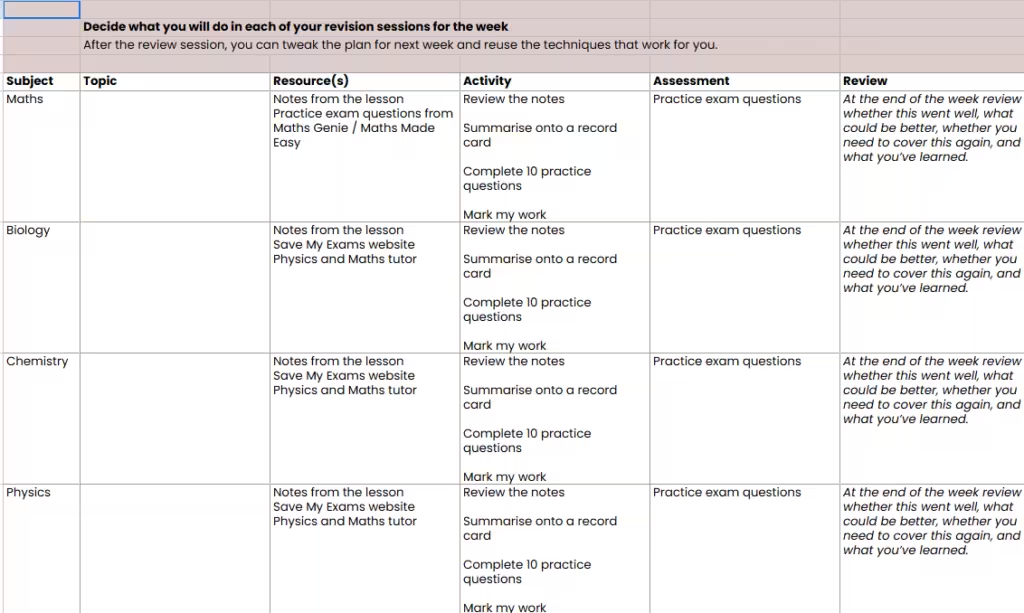
An example of a weekly study planner for my students at Green Tutors
Top AI Tools for Studying and Tutoring
There are so many places to go to find study resources. I shared my favourites a few years back at https://greentutors.co.uk/services-students/. But sometimes the choice is part of the problem – where do we start?
There’s a world of AI tools out there to help students (and tutors!) stay on top of things. Here are some of the best:
For Studying and Learning
Quizlet: Perfect for creating flashcards and study plans using spaced repetition.
Photomath: Snap a photo of a maths problem, and it’ll solve it with step-by-step explanations.
Grammarly: A writing assistant that polishes grammar and suggests improvements.
Khan Academy (Khanmigo): Like having a personal tutor for maths and science.
Brainly: Post a question and get answers from the community, supported by AI.
For Staying Organised
Notion AI: Organises your notes, builds study plans, and even sets reminders.
Evernote: Helps you manage tasks and search through notes with AI assistance.
Focusmate: Pairs you with a virtual study buddy for accountability.
Forest App: Gamifies focus—plant virtual trees as you complete tasks.
For Creativity and Research
ChatGPT/OpenAI: Brilliant for brainstorming ideas, creating essay outlines, or summarising notes.
Perplexity AI: Delivers quick research answers and provides sources.
WolframAlpha: Great for solving complex maths or science problems with detailed explanations.
For Coding and STEM
Tynker: A fun way for kids to learn coding through interactive projects.
Code.org: Offers engaging AI coding challenges and tutorials.
Deepnote: Ideal for older students tackling data science.
For Well-being
Headspace: Tailors mindfulness exercises to help with stress.
Woebot: A friendly chatbot to support mental health and reduce exam anxiety.
For Learning Languages
Duolingo: Gamified lessons that adapt to how you’re doing.
Beelinguapp: Offers bilingual stories for practising reading and comprehension.
Teaching Kids to Use AI Responsibly
While AI is an amazing tool, it’s not a shortcut. Using it to cheat defeats the whole point of learning, and, let’s face it, it’s usually pretty obvious when a student has copied something straight from ChatGPT!
More importantly, AI isn’t always right. It doesn’t think like we do and can repeat mistakes or spread dodgy info. That’s why critical thinking is so important. Teach your kids to ask thoughtful questions and double-check answers. And remember, OpenAI recommends that kids under 13 shouldn’t use ChatGPT without parental consent, and teens should be supervised. This is a great chance for you to join in, explore AI together, and encourage your child’s creativity.
A Tool to Help, Not Replace
AI is here to lend a hand, not take over. Whether it’s helping you organise a study schedule, brainstorm ideas, or tackle tough subjects, it’s all about enhancing learning—not replacing the effort. At the end of the day, the output is still your child’s work, and that’s what matters most.
I would love to hear about what tools you have used, and how they have helped you. Share below, or message me on 07958069480.
Without the pressure of exams or major school changes, Year 9 often flies under the radar. However, it’s a transformative year where students begin to explore who they are, both academically and socially. At 13-14 years old, teenagers experience significant changes in their behavior, social interactions, and independence, making this a crucial time for development.
As a parent, you may notice your child becoming more independent—taking themselves to school, making their own social plans, and expressing their unique personality. This period of self-discovery is important, as students begin making key decisions about their future studies, such as choosing their GCSE subjects or vocational qualifications.
Developing Key Skills Through Group Projects
Year 9 is the perfect time for students to engage in group project work, which encourages collaboration and helps them develop critical thinking, independent research, and communication skills. Rather than focusing solely on exam prep, group projects allow students to explore their interests in a more dynamic way. This helps them identify their strengths, build confidence, and prepares them for life beyond the classroom.
At Green Tutors, we emphasize the importance of group learning in developing well-rounded students. Read more about the benefits of group tuition and how it can build confidence, leadership, and teamwork in your child(Green Tutors).
Preparing for GCSEs and Making Informed Choices
Towards the end of Year 9, many students begin studying GCSE content. But before diving into exam prep, there’s still time for self-discovery. Helping your child understand their strengths and passions is key to making informed subject choices. Collaborative group work, like the kind we offer at Green Tutors, helps students become more aware of their abilities, which can lead to better decisions when choosing their GCSE subjects.
When selecting GCSE subjects, consider:
What subjects do they enjoy and excel at?
How do these choices fit into future study or career plans?
Will these subjects play to their strengths?
For additional support, tools like Unifrog can help students narrow down their subject choices based on interests and career goals.
How We Support Year 9 Students
At Green Tutors, we offer KS3 science group classes that focus on project-based learning. Our students not only learn scientific concepts, but they also develop critical life skills through collaboration and communication. By engaging in projects, students can explore their strengths and better understand how these align with their future aspirations. This early preparation can set them up for success in their GCSEs and beyond.
If you’re interested in learning more about how we can support your child’s academic and personal growth through STEM project learning, get in touch with us at 07958069480 or visit our homepage at greentutors.co.uk.
In this video, Cai Graham and I discuss effective strategies and expert STEM tutoring to boost learning and reduce exam stress. As we entered into 2023, I had an insightful discussion with Cai Graham, an expert in stress management and effective study techniques. Here’s a recap of our conversation, packed with actionable advice to help your child thrive academically and emotionally.
1. Implementing the Pomodoro Technique for Effective Study Sessions
One of the standout strategies we discussed is the Pomodoro Technique, a time-management method that promotes productivity and focus:
Focused Intervals: Work for 20 minutes, followed by a 5-minute break. This short, intense focus helps maintain concentration and prevent burnout.
Scheduled Breaks: Regular breaks are essential for mental rejuvenation and maintaining sustained attention.
Encourage your child to use this technique to break their study time into manageable segments, making the study process less daunting and more productive.
2. Breaking Down Study Material into Manageable Chunks
A common challenge for students is feeling overwhelmed by the sheer volume of material. Cai’s advice is:
Chunking: Divide study material into smaller, more digestible sections or modules.
Prioritisation: Start with the least favourite subjects first when energy levels are high, then move on to more enjoyable topics later.
By organising study material into smaller chunks and prioritising tasks, students can reduce overwhelm and improve their focus.
3. Managing Stress and Anxiety: Practical Techniques
Understanding and managing stress is crucial for exam success. Cai shared practical techniques to help your child manage stress:
Box Breathing: This technique involves breathing in for four seconds, pausing, exhaling for four seconds, and pausing again. It calms the brain’s stress response and is easy to practice anywhere.
Identifying Triggers: Help your child recognize their stress triggers and develop personalised coping strategies.
These stress management techniques can help your child stay calm and focused during their study sessions and exams.
4. Embracing Compassionate Parenting
Support during exam periods involves balancing understanding and expectations:
Self-Compassion: As a parent, be kind to yourself and acknowledge the challenges you face. Adapt your approach to fit your family’s needs.
Mentoring Approach: Rather than managing every detail, mentor your child, offering guidance and support tailored to their individual needs.
Creating a supportive environment that accommodates your child’s unique needs can lead to better outcomes and reduce stress.
5. The Role of STEM Tutoring in Exam Preparation
If you’re looking for additional support for your child, professional tutoring can make a significant difference:
Customised Learning Plans: We offer tailored STEM tutoring that addresses your child’s specific needs and strengths.
Integrated Techniques: Our tutoring incorporates effective study and stress management techniques like the Pomodoro Technique and breathing exercises.
Boosting Confidence: We aim to build your child’s confidence and help them overcome academic challenges.
For personalized support and guidance, consider reaching out to us at Green Tutors.
Contact Us
To explore how our STEM tutoring services can benefit your child, contact Georgina Green at georgina@greentutors.co.uk. We’re here to provide the expert support your child needs to excel in their GCSEs and A-Levels.
Together, we can turn exam stress into success. Empower your child with the right tools and support to achieve their best in 2025.
We use technologies like cookies to store and/or access device information. We do this to improve browsing experience and to show (non-) personalized ads. Consenting to these technologies will allow us to process data such as browsing behavior or unique IDs on this site. Not consenting or withdrawing consent, may adversely affect certain features and functions.
Functional
Always active
The technical storage or access is strictly necessary for the legitimate purpose of enabling the use of a specific service explicitly requested by the subscriber or user, or for the sole purpose of carrying out the transmission of a communication over an electronic communications network.
Preferences
The technical storage or access is necessary for the legitimate purpose of storing preferences that are not requested by the subscriber or user.
Statistics
The technical storage or access that is used exclusively for statistical purposes.The technical storage or access that is used exclusively for anonymous statistical purposes. Without a subpoena, voluntary compliance on the part of your Internet Service Provider, or additional records from a third party, information stored or retrieved for this purpose alone cannot usually be used to identify you.
Marketing
The technical storage or access is required to create user profiles to send advertising, or to track the user on a website or across several websites for similar marketing purposes.










Recent Comments