Finding the right support for your child feels like a complex task. Private tuition in the UK is currently unregulated, meaning no law requires independent tutors to hold background checks or teaching qualifications. You need more than just an hourly session. You need...
(And a Tutor You Can Trust) When you are looking for a tutor to support your child, how do you decide who to contact? I think Qualified Tutor said this best when they defined their certified tutors as Safe, Skilled, and Supported. This framework encapsulates...
As we approach the exam season, I am deeply reminded of how the process impacts the entire family. This year, I’ve had a clear insight into the family dynamics, watching my niece, Caitlyn, prepare for her exams. She’s working hard for the grades she needs to achieve...
A Guide for Parents and Tutors Love it or loathe it, AI in education is taking the digital world by storm—and it’s not going anywhere. But don’t worry; it’s not as scary as it sounds. Used the right way, AI in education can be a brilliant tool to make life easier for...
Without the pressure of exams or major school changes, Year 9 often flies under the radar. However, it’s a transformative year where students begin to explore who they are, both academically and socially. At 13-14 years old, teenagers experience significant changes in...
In this video, Cai Graham and I discuss effective strategies and expert STEM tutoring to boost learning and reduce exam stress. As we entered into 2023, I had an insightful discussion with Cai Graham, an expert in...
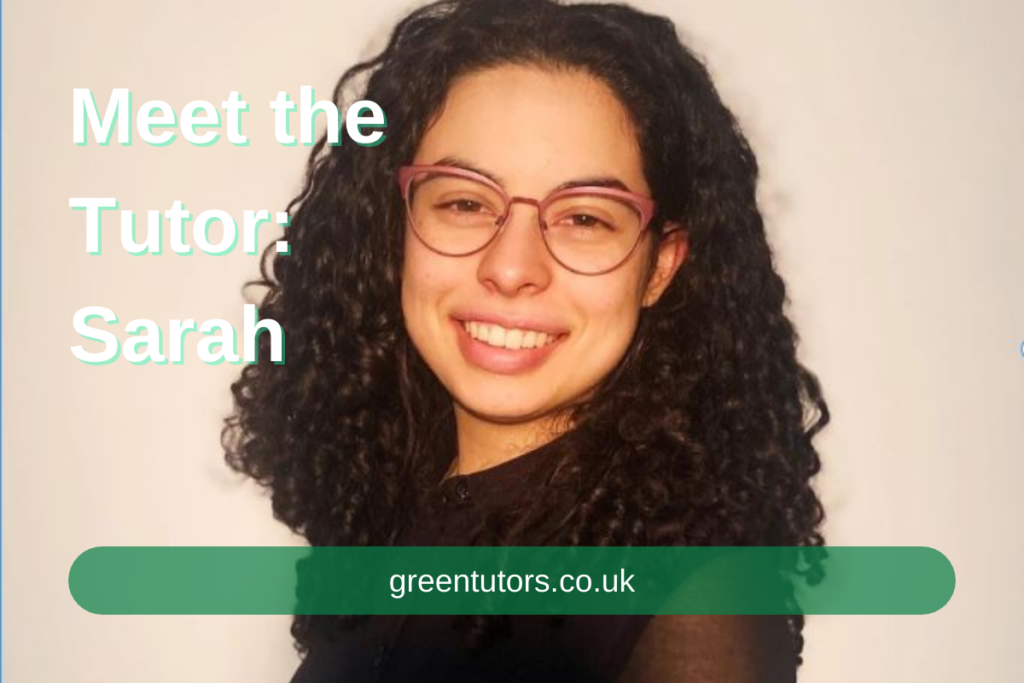
Sarah Patterson is a recent graduate from Imperial College, joining the Green Tutor’s team in 2020. We asked Sarah about her academic and career experience, and her career advice for students. When asked why she wanted to be a tutor, Sarah replied: “I want to help students achieve their academic goals and support them through their A-level and GCSE qualifications.”
Sarah’s an accomplished student herself with a passion for STEM, having achieved a First Class MSci Chemistry degree with a Year in Industry from Imperial College London. To become a better tutor and support her students, Sarah undertook the Qualified Tutor course and achieved the Level 3 Qualification. This course taught her about safeguarding for tutors, building effective tutoring relationships, the learning loop, and how to adapt tutoring for children with special educational needs and disabilities.
We asked Sarah about her pathway onto her STEM career, and her top tips for GCSE students right now.
What kind of student were you at school?
I was very studious, academically competitive but also loved socialising and spending time with friends.
Did you have a tutor?
No, I did not.
How did you decide what to study?
I decided to study chemistry as I thought it would give me a diverse skill set. This has indeed been the case; I have learned Python for programming, writing technical lab reports, and developed excellent time management skills through juggling lab work, studying, and extracurricular activities.
Have you made any mistakes along the way to your current career and do you have any career advice?
During the start of my time at University, I made the mistake of focusing too much on my studies. I should have gotten involved with the career centre earlier and applied for spring internships and first-year internships.
When I was applying for roles, I found interviews very challenging. I tried to learn as much as possible from these setbacks and practise with friends beforehand. Another set-back is lacking self-confidence which is something I try and help my students with.
What are your top three tips for GCSE students?
Go through exam board specifications/curriculum expectations
Practise past papers/exam style questions under exam conditions
Start revising early
We’re excited to welcome Sarah to the team to tutor Chemistry, Biology, and maths with us. Her experiences and career advice highlight the importance of having a view ‘beyond the books’ when studying. Having a mentor who has walked your path before you can help you to make the best use of your time, and ensure you don’t miss out on opportunities along the way.
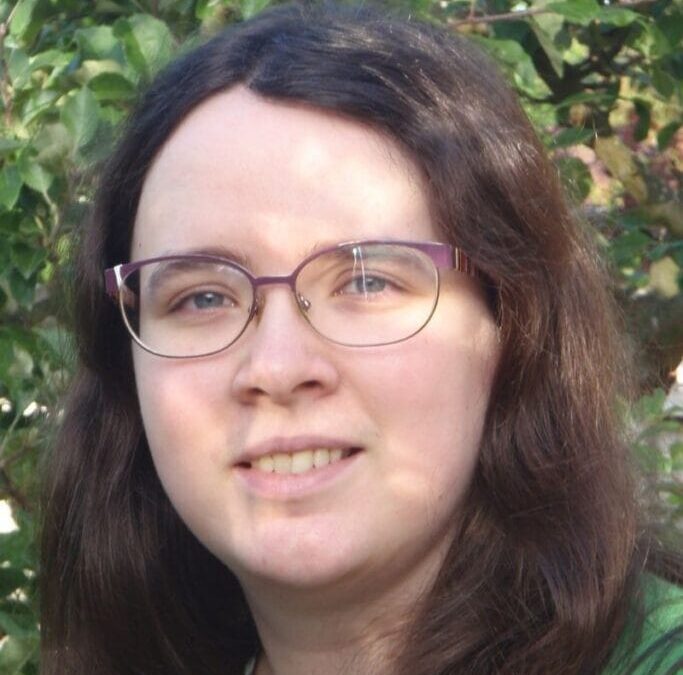
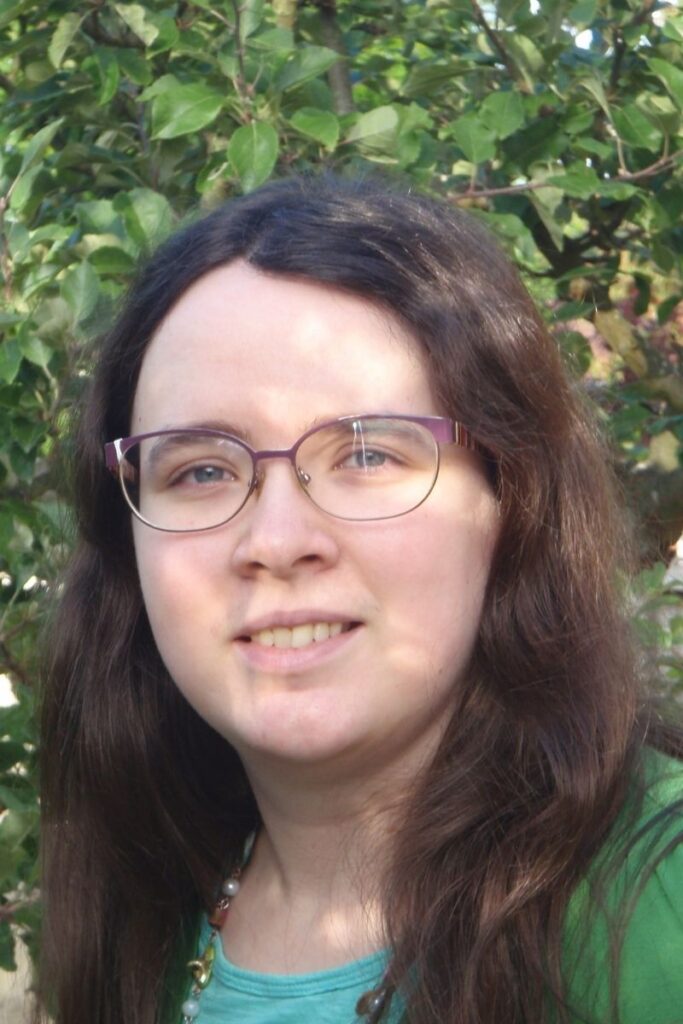
Today I’m introducing the newest member of the Green Tutors, team. Kirsten is joining us as a full time A level biology tutor. I’m delighted to welcome Kirsten to the team.
October is ADHD Awareness Month, and a fitting time to talk about how ADHD has shown up in Kirsten’s experiences.
ADHD stands for Attention-Deficit/Hyperactivity Disorder, and is a neurodevelopmental disorder than can impact both adults and children. It is often undiagnosed in girls, and can have an impact on their studies and general life in the meantime. You can learn more about ADHD Awareness Month at https://www.adhdawarenessmonth.org/.
“I have ADHD, and I love fiction – getting deeply invested in and nerding out over stories I like, including talking about them in depth to others who like the same stories. I also like biology and similarly enjoy talking about biology to people who are interested in learning about it, which is why I’m now a biology tutor!”
Kirsten Legg
What qualifications do you have?
A Levels in Biology, Chemistry, Physics, Maths and Further Maths.
First Class BA in Natural Sciences from the University of Cambridge.
PhD in Chromosome and Developmental Biology from the University of Oxford.
Level 3 in Education and Training from Qualified Tutor (well, not quite yet, but getting there! Soon!)
What is your current role?
Full-time A level biology tutor, nothing else!
What did you study to get here?
The aforementioned degrees, but I specifically focused on the cellular/molecular side of biology. My PhD was on DNA repair.
Is this what you always wanted to do?
For a long time, I didn’t really know what I wanted to do, other than something related to my interest in biology. I used to think that the only real way to pursue that was through doing research. It was only when I realised I couldn’t continue in research for the sake of my mental health that I started looking into other options and figured out that tutoring was a much better fit for me.
What kind of student were you at school?
The “gifted” kind.
I was naturally bright enough and interested enough in my subjects that my ADHD didn’t happen to get in the way in school, or even really in university. This was not a good thing in the long run, because it gave me too-high standards for myself and set off a lot of self-esteem issues when I inevitably couldn’t match up to them any longer.
Did you have a tutor?
Only for maths, sort of.
I was a few years ahead in it, so I had one-on-one lessons once a week with one of the school’s maths teachers to teach me the material. This was probably a more fun way to learn maths than the regular classroom way would have been! So at least in that sense, I have experience of how having a tutor can make a subject more engaging.
How did you decide what to study?
I just found biology really cool and intriguing once I got to A level and we started really getting into the cellular/molecular stuff, so I wanted to learn even more about it.
Did you make any mistakes or have any setbacks in your career path?
Yes! A lot!
I did a PhD because I felt like I was supposed to, as if it was the only option for pursuing my interest in science. I ended up struggling massively and burning out, because this was finally a situation in which my undiagnosed ADHD made things difficult for me.
While I managed to complete my PhD in the end, I knew I couldn’t stand to continue in research, so I spent a while not knowing what to do with myself, because most other jobs would be difficult for me in the same kind of way.
I’ve figured out what I want to do now – this, tutoring – but I’m still working on my mental health baggage from all those years of taking the wrong path and failing my own too-high expectations.
What are your top three tips for GCSE students?
Just some general life advice:
It’s okay to not be perfect, to struggle and fail at things and have difficulties that the people around you don’t seem to have.
It’s okay to not know what to do with yourself yet; you’ve got plenty of time to figure it out. Maybe you’ve got the impression that adults know exactly what they’re doing and have their whole lives figured out by their early twenties? That’s all nonsense, actually.
So much of Kirsten’s story resonates with my experiences, and with the struggles I see in my students now. It is common to expect to start perfect. It is the privilege of a tutor to help students to learn to accept and appreciate exactly who they are and what they can achieve.
Kirsten is currently available for online lessons on weekday evenings and weekends. If you would like to arrange biology tuition up to A level with Kirsten, submit your details at https://greentutors.co.uk/request-for-tuition/ and we’ll arrange and introduction. Or you can Book a phone call with me (Georgina) to talk more about what you need.
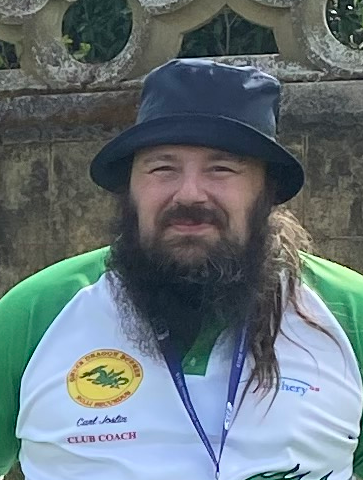
Carl joined the Green Tutors team in 2020 to tutor A level maths, GCSE maths, KS3 maths, and computer science.
Carl is an expert in computer languages having studied a degree in Computer Science. He is also a maths fan, and his degree included a significant amount of mathematics.
Carl has extensive experience in working with children of all ages, both academically and as a senior member of an archery club, of which he is a vice chair.
Carl likes to spend his time supporting others. He won a Special Achievement Award from Millennium Volunteers while at school. Whilst at University he was employed as Student Proctor helping other students with their studies, and as a Visiting Lecturer.
Qualifications BSc in Computer Science – 1st Class Honours
What is your current role? Level 2 Archery Coach, vice chair of an archery club and PhD student
What did you study to get here? PhD (ongoing) at University of Hertfordshire Computer Science Degree at University of Hertfordshire – 1st Class Honours Double A Level in Information Technology
Is this what you always wanted to do? I have always been passionate about computing and my mathematics knowledge stood me in good stead to achieve my 1st Class Honours degree in Computer Science
What kind of student were you at school? Focused and hard working
Did you have a tutor? Yes, my poor health meant that I had several different home tutors who helped me achieve my ambition of going to college and ultimately university, to further my studies.
How did you decide what to study? I was always good at Maths and Computing and wanted to use these as the basis for my career path.
Did you make any mistakes or have any setbacks in your career path? I suffered from poor health which impacted my day-to-day studying and my ability to undertake my chosen career path.
What are your top three tips for GCSE students? 1. Enjoy yourself. 2. It is just as important to know when to take a break as it is to know when to study. 3. You can do it, you just need to work out how to.
Carl is a great example of how students can overcome personal difficulties with a good support network. Carl’s health impacted on his school attendance and development at school, but he was still able to achieve his academic goals with the help of home tutors. He has spent a lot of his time since then giving back to the community through volunteering.


Recent Comments