The world of online learning is a very exciting space in 2024. The momentum that started with virtual learning during school closures has grown exponentially in that time. We’re using exciting engagement and visualisation tools in our lessons, and there are an infinite number of digital resources that enable us to see the world from our laptops.
And yet I frequently find myself convincing parents to try their first virtual lesson when they’re adamant they want face to face. And I can understand where this comes from. The parent experience of lockdown and virtual schooling was painful. Zoom fatigue is very real, and the online learning that happened in 2020 was delivered by overstretched tutors with platforms that were being pushed beyond their 2020 capabilities.
If that’s the experience you’re expecting of an online tutoring session, please allow me five minutes to change your mind.
Equality of equipment
In the virtual classroom, each student has access to the same tools. This means that everyone starts on the same footing. All of the tools they need exist within the virtual classroom.
screen sharing
tech tools
free software
They just need the internet/mobile connection. If you are able to provide this, then you are able to provide everything they will ever need to learn.
Location is irrelevant
You can connect with tutors all over the world in the virtual classroom. This means that you can connect with the best tutor for you regardless of location. It also allows your learning experience to include wider perspectives.
There is no travel time required. When your tutor doesn’t have to spend time and money travelling to you, they can use that time and money to deliver a better service for you.
There is also no requirement for you to be there to be there – you can observe with the web link too. Parents spend more than enough time playing taxi and chaperone. You don’t need to do that in the classroom too.
Tech availability
The world of online learning is growing rapidly, which means that the online world has a vast array of tools to offer that you may not currently even be aware of.
Your tutor, working in that world, will have direct access to this, and will likely have the capacity to invest in paid tools that wouldn’t be worthwhile for you to invest in alone.
Lean in to the digital works
Your virtual tutor should be willing to meet with you through the same tools they’ll use to deliver your lessons, and so you will see what the environment will be like for your child before you start.
The virtual classroom does not look like the Zoomageddon you probably experienced through lockdown. A good tutor will deliver an engaging, connected session through their virtual classroom.
Neurodiverse approach
A frequent objection to online tutoring is that it is less accessible for neurodiverse students. That is likely also a perspective that leans back into the experience of school closures and Zoom fatigue. A student with executive function and regulation issues would be truly up against it in a group Teams session with no cameras or mics on. Death by PowerPoint might be something you’re familiar with. I don’t think neurodiversity is the problem so much as the platform, or not using the platform as intended. In a one to one or small group session with a tutor experienced in the virtual classroom it should be a completely different experience.
Are you interested in seeing what the digital classroom looks like? You can schedule a virtual classroom session with me anytime at https://usemotion.com/meet/georgina/meeting.
Tutoring is becoming more widespread, and it’s a wonderful thing to see. I have seen a corresponding growth in resources, tools, and training for personal tutors. Alongside this, it can be a challenge for a parent to connect with a suitable tutor as I see requests for a tutor inundated with a variety of offers as soon as they are shared. How can parents choose the right tutor for their child and know that their investment will pay off?
Skills Verification
There are no qualifications required to be a tutor, and this is one of the main qualms in choosing a tutor. The usual response to this is to choose a qualified teacher. While this means that they are training in pedagogy it does not mean that they are qualified to tutor. The two are different specialisms, and it is well worth digging deeper than this.
Many parents are unaware that there is in fact a Qualification for Tutors available from Qualified Tutor. This covers:
Unit 1: CPD Safeguarding
Unit 2: Relationship Matters
Unit 3: The Learning Loop
Unit 4: Barriers for Learning: Special Educational Needs and Disabilities and Mental Health
Unit 5: Powerful Feedback
The training is specifically focused on one to one or small group tuition, which is a different skill to classroom teaching.
All of the Green Tutors team are provided with this training. We also contribute to the training and discussions in building resources for tutors with Qualified Tutor.
Alongside this training, Qualified Tutor provide Skills Audits to confirm that tutors have the required subject, examination, and curriculum knowledge to support their students. This verification from an external training provider can give you absolute confidence to choose a tutor qualified in what they offer.
Safety First
Working in the private sector also means there is no requirement for safeguarding or criminal records checks before someone can start working as a tutor. This is something that professional tutors are well aware of and take seriously, and I encourage you to ask for proof of a DBS certificate and Safeguarding training.
The Tutors Association is a professional membership body for tutors providing criminal records checks and a code of conduct for tutors. All tutors signed up to this organisation have agreed to a code of conduct which requires them to practise safe and responsible tutoring. This is something that TTA takes seriously and any tutor found not to be holding to this will have their membership revoked.
Ask to see a DBS certificate (Disclosure and Barring Service) and Safeguarding Training certificate issued within the last 12 months before scheduling any appointments with your potential tutor. This is something that all Green Tutors have and yet no parent has ever asked me to share them in all of my time tutoring (since 2011). This simple step can help you to identify a professional tutor.
Community Referrals
Those tutors most committed to professional development and responsible tutoring are part of an online tutoring community. There are many, including the Love Tutoring Community, Tutors Need Tutors, and the Tutors Learning Network. I am a contributing member of all of these communities (and founder of Tutors Need Tutors) and have learned much more through the connections these have allowed with other tutors than in any of my previous training. While community is not a requirement of a professional tutor, it is certainly a green flag for responsible tutoring. Being able to choose a tutor referred to you by an existing tutor in these communities should give you even more confidence in their standard of tutoring.
Choose a Responsible Tutor
While anyone can set themselves up as a tutor, responsible tutoring shows and will be reflected in their reputation and practices.
Does your tutor communicate with you exactly what to expect from lessons?
Do they support your child with their studies outside of lessons, and encourage them to build independence?
Are they helping to identify goals for their progress, and encouraging a positive attitude to learning?
Responsible tutoring ultimately leaves the tutor redundant as a sign of success. We aim for our students to not need us anymore, and the sooner that can happen, the better we have done our job.
The long term pay off from this is that clients will sing our praises and will be happy to refer us to their friends.
If your tutor is not able to share stories and referrals from happy customers despite claiming to have experience in the industry, there is likely a reason for this.
This is not to say that you can’t trust a new tutor. They will also be learning as they go, but their commitment to responsible tutoring can easily be demonstrated by any of the previous points made – community membership, safeguarding training, DBS certificates, and relevant qualifications.
Specialism
While there are many qualified, responsible tutors, we are all different. Each tutor will offer a different service, a different relationship, and a different journey for your child. You should look for those with a specialist interest in the tuition you need. There are 11+ tutors, exam skills coaches, STEM tutors, SEND tutors, retired teachers, student tutors, dyslexia and dyscalculia specialists, teachers turned tutors, and many more.
Who is the best fit for your child?
What do they need?
Rates
“How much do I charge for tutoring?” is a question I see asked pretty much weekly. There isn’t an answer for that question. Much like everything else in the private sector, it tends to increase with qualifications, experience, and the fullness of your calendar.
It is important to know what your budget can stretch to, as tutoring is often a long term commitment. You get what you pay for, but if you are happy to invest in a student for long term support, it can be worthwhile for your child to grow with them.
The below is a very rough idea of the sorts of prices for one to one tutoring in the UK.
Green Tutors pay scale
If you’re looking to connect with a tutor, a great place to start is the Qualified Tutor Accredited Tutor Directory. All of the tutors in this directory have been assessed against the International Tutoring Framework, and have been found to meet the gold standard for tutoring businesses committed to delivering the highest quality tuition.
The purpose of this document is to outline Green Tutors Safeguarding Policy and Procedures, and set out the ways of working we use as a business to show our commitment to ensuring our safeguarding practices reflect our statutory responsibilities, government guidance and best practice.
This policy establishes a framework to support all those who come into contact with Green Tutors, protect them from abuse and maltreatment of any kind and clarifies the organisation’s expectations.
We will apply robust risk management processes for the identification of situations which may require the organisation to make professional judgements to protect students from harm.
The organisation will collectively manage risks and reduce the likelihood of abuse by:
The provision of up-to-date safeguarding policies and procedures that reflect current safeguarding legislation and guidance
Have robust safer recruitment, selection and appointment procedures for staff and tutors
Promote and use safer working practices for staff, tutors and students
The provision of induction and ongoing training for staff and tutors
Developing and maintaining a culture of vigilance within all areas of the organisation’s work
Protecting students from harm
Making sure people can raise safeguarding concerns
Handling allegations or incidents in accordance with policies and procedures
Report any allegations or incidents to the relevant authorities
It is the responsibility of all staff and tutors to read this policy and supporting procedures and know what to do in the event of a safeguarding concern.
Who Is This Policy For?
Tutors, Parents, Students, and Green Tutors staff.
Designated Safeguarding Officer
Name: Georgina Green
Phone: 07958069480
Email: georgina@greentutors.org.uk
Safeguarding Duty of Care
Safeguarding and promoting the welfare of children and young people is defined as:
Protecting children from maltreatment
Preventing impairment of children’s mental and physical health or development
Ensuring that children grow up in circumstances consistent with the provision of safe and effective care; and
Taking action to enable all children to have the best outcomes
(Keeping Children Safe in Education (KCSIE), DfE, September 2022)
Abuse is a form of maltreatment of a child. Somebody may abuse or neglect a child by inflicting harm or by failing to act to prevent harm. Children may be abused in a family or in an institutional or community setting by those known to them or, more rarely, by others. Abuse can take place wholly online, or technology may be used to facilitate offline abuse. Children may be abused by an adult or adults or by another child or children (KCSIE, 2022, para 26).
Safer Recruitment
The Safeguarding Vulnerable Groups Act 2006 and The Tutors’ Association Code of Conduct requires Green Tutors to carry out specific vetting (enhanced DBS and barred list checks) on staff or tutors if they work with children and vulnerable people.
Interview
All tutors must successfully pass a live, online interview before being admitted onto the faculty.
ID Verification
Tutors will be required to provide proof of identification during their live interview. This will be verified by the interviewer during the live interview.
Green Tutors conducts live, virtual interviews as well as each tutor is subject to lesson observations periodically as a secondary control.
Criminal Background Checks
We require all tutors to have a valid enhanced Criminal Background check to tutor on the platform.
Green Tutors considers a criminal background record check to be valid if it:
Is an up to date enhanced DBS check
Is issued in the UK
Details Children’s Barred List Information
Is relevant to the tutor’s place of work and previous address history
All new tutors joining the platform will be required to have an updated Enhanced DBS Check with Child Barring Service, unless they are registered on the DBS Update Service prior to starting on the platform. Tutors who teach or reside in Scotland, Wales, NI or abroad may be subject to additional checks at the request of Green Tutors.
Section 242 of KCSIE 2022 states “Once the checks are complete, the DBS will send a DBS certificate to the applicant. The applicant must show the original paper DBS certificate to their potential employer before they take up the post, or as soon as practicable afterwards.”
Green Tutors uses UCheck, a certified screening provider to carry out any new criminal background checks. UCheck provides confirmation to Green Tutors on whether a tutor has convictions before sending a certificate to the individual. Green Tutors uses this result to determine appointments.
All tutors must share a copy of their DBS certificate with Green Tutors once it has been issued. Green Tutors will retain a copy of the certificate and confirm renewal annually, in line with KCSIE 2022 guidance.
Tutors will not be allowed to join the platform until we have received the results of their DBS check from our DBS online screening partner.
Tutors on the Update Service will be expected to provide a copy of the original DBS certificate to Green Tutors so a check can be conducted before they gain access to the platform.
As an organisation using Disclosure information for the purpose of assessing an applicant’s suitability for employment purposes we undertake to treat all applicants fairly. We undertake not to discriminate unfairly against any subject of a Disclosure on the basis of a conviction or other information revealed.
We are committed to the fair treatment of our staff, potential staff or users of its services, regardless of race, gender, religion, sexual orientation, responsibilities for dependants, age, physical/mental disability or offending background.
A Disclosure should only be requested after a thorough risk assessment has indicated that one is both proportionate and relevant to the position concerned. For those positions where a disclosure is required, all application forms, job adverts, and recruitment briefs will contain a statement that a Disclosure will be requested.
Unless the nature of the position allows us to ask questions about your entire criminal record, we will only ask about “Unspent” convictions as defined in the Rehabilitation of Offenders Act 1974.
Reference Checks
All tutors are required to submit a minimum of 2 reference checks before gaining access to the platform.
Reference checks must be:
Addressed to Green Tutors
Either from previous employment, an academic source or a recognised professional who has been known to the applicant for a minimum of 6 months
Confirm dates of employment
Confirm that the candidate is suitable to work with children
References will be asked for during onboarding. If a tutor fails to have 2 complete and relevant references, they will not be permitted to tutor on the faculty.
Tutor Training
Green Tutors, partnered with Qualified Tutor, believes that training and raising awareness of safeguarding issues, policies and procedures is fundamental to the development and maintenance of a safer environment, safer organisation and safer staff/ tutors.
We ensure that appropriate safeguarding training is provided to all staff and tutors to assist them in:
preventing abuse
recognising abuse
recording concerns
responding appropriately to allegations of abuse
knowing who to tell, and
when information can be shared.
Safeguarding training at the appropriate level to the role and responsibilities held is a mandatory element of all inductions for staff and tutors. Furthermore, safeguarding training is not regarded as a ‘once only’ activity, but as an ongoing development of skills and knowledge of safeguarding practices.
Monitoring the working practice of staff and tutors is undertaken not less than once per year through the appropriate supervision mechanisms such as online courses and quizzes to ensure the requirements of this policy and supporting procedures are being met.
What To Do If You Have A Safeguarding Concern
Reporting
It’s vital that you report any safeguarding concerns to Green Tutors Designated Safeguarding Officer so we can investigate fully. All Safeguarding concerns will be investigated within 24 hours of Green Tutors receiving the report.
To help the team respond and refer appropriately you should follow the guidance below.
Remember that concern documents are used in court cases and inquests as evidence.
Reports should be objective and detailed.
Please alert the team as soon as possible. It can take several hours to deal with even urgent concerns and the earlier we start the better
Green Tutors will deal appropriately and promptly with all allegations or concerns and refer all safeguarding concerns or allegations about its directors, staff or tutors immediately to the appropriate local authority designated officer (LADO) in accordance with local safeguarding procedures and practical guidance, in accordance with the statutory guidance Working Together to Safeguard Children, 2018.
Green Tutors will consider immediate suspension (without prejudice) if a safeguarding allegation is made against any staff member or tutor pending investigation when there is cause to suspect that another child(ren) is/are at risk of harm from their continued contact with children. Refer to KCSIE 2022, Part 4: 379.
Suspension will also be considered even if the allegation is not linked to their role or activity with Green Tutors.
Disclosure
Once a disclosure has been made or a concern has been shared, the Safeguarding Team will consider the information, if necessary, taking advice, and will make a decision to either:
Keep detailed records of the concern with no further action at this time
Make a child protection referral to Children’s Social Care
Report any concerns about unsafe practice by any of its directors, staff or tutors to the Disclosure and Barring Service (DBS)
Where a child is suffering, or is likely to suffer from harm, it is important that a referral to children’s social care (and if appropriate the police) is made immediately.
Once the decision is made to make a referral the Safeguarding Team will contact the relevant Children’s Social Care Team and make a telephone referral. This must be followed up in writing within 24 hours.
Emergency responses
Where a child is identified at immediate risk of harm then tutor will immediately contact the Designated Safeguarding Lead who will in turn contact the Police for the areas where the risk is located using 999.
Green Tutors Staff and Tutors
All Green Tutors staff and tutors have a shared responsibility to safeguard and promote the welfare of children and young people. They should know how to recognise, respond to, report and record any safeguarding concerns.
All staff and tutors are responsible for following the organisation’s safeguarding procedures for reporting any concerns relating to abuse or neglect or suspected abuse or neglect of any child or young person immediately.
In an emergency staff and tutors will be expected to report urgent concerns directly to the relevant statutory agency.
Complaints
If a complaint is identified as a potential safeguarding concern, then the Safeguarding Procedures will be followed.
Underpinning Legislation And Guidance
Legislation
Children Act 1989
Human Rights Act 1998
United Nations Convention on the Rights of the Child, 1991
Sexual Offences Act 2003
Female Genital Mutilation Act 2003
Children Act 2004
Safeguarding Vulnerable Groups Act 2006
The Forced Marriage (Civil Protection) Act 2007
The Equality Act 2010
Children and Families Act 2014
Anti-Social Behaviour, Crime and Policing Act 2014
Modern Slavery Act 2015
Counter Terrorism and Security Act 2015
Children and Social Work Act 2017
Data Protection Act 2018
Voyeurism (Offences) Act 2019
Domestic Abuse Act 2021
Children’s Code (issued under S125 DPA 2018, effective Oct 2021)
Working Together to Safeguard Children 2018 places a general duty on schools to work and cooperate with other agencies to safeguard and promote the welfare of children. Green Tutors is committed to do this by having an open, honest and transparent line of communication.
Keeping Children Safe in Education 2022 (KCSIE) is statutory guidance issued from the Department for Education under Section 175 of the Education Act 2002. Schools and colleges must have regard to this when carrying out their duties to safeguard and promote the wellbeing of children.
Children’s Code is a statutory code of practice that articulates how online services likely to be accessed by children should comply with the UK GDPR when using children’s data.
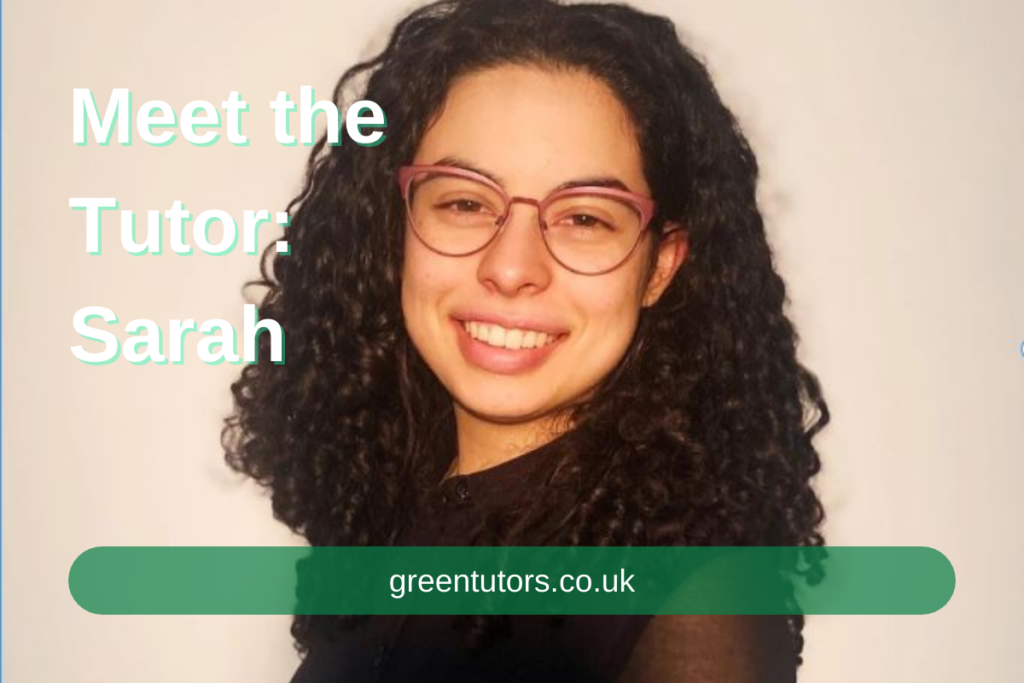
Sarah Patterson is a recent graduate from Imperial College, joining the Green Tutor’s team in 2020. We asked Sarah about her academic and career experience, and her career advice for students. When asked why she wanted to be a tutor, Sarah replied: “I want to help students achieve their academic goals and support them through their A-level and GCSE qualifications.”
Sarah’s an accomplished student herself with a passion for STEM, having achieved a First Class MSci Chemistry degree with a Year in Industry from Imperial College London. To become a better tutor and support her students, Sarah undertook the Qualified Tutor course and achieved the Level 3 Qualification. This course taught her about safeguarding for tutors, building effective tutoring relationships, the learning loop, and how to adapt tutoring for children with special educational needs and disabilities.
We asked Sarah about her pathway onto her STEM career, and her top tips for GCSE students right now.
What kind of student were you at school?
I was very studious, academically competitive but also loved socialising and spending time with friends.
Did you have a tutor?
No, I did not.
How did you decide what to study?
I decided to study chemistry as I thought it would give me a diverse skill set. This has indeed been the case; I have learned Python for programming, writing technical lab reports, and developed excellent time management skills through juggling lab work, studying, and extracurricular activities.
Have you made any mistakes along the way to your current career and do you have any career advice?
During the start of my time at University, I made the mistake of focusing too much on my studies. I should have gotten involved with the career centre earlier and applied for spring internships and first-year internships.
When I was applying for roles, I found interviews very challenging. I tried to learn as much as possible from these setbacks and practise with friends beforehand. Another set-back is lacking self-confidence which is something I try and help my students with.
What are your top three tips for GCSE students?
Go through exam board specifications/curriculum expectations
Practise past papers/exam style questions under exam conditions
Start revising early
We’re excited to welcome Sarah to the team to tutor Chemistry, Biology, and maths with us. Her experiences and career advice highlight the importance of having a view ‘beyond the books’ when studying. Having a mentor who has walked your path before you can help you to make the best use of your time, and ensure you don’t miss out on opportunities along the way.
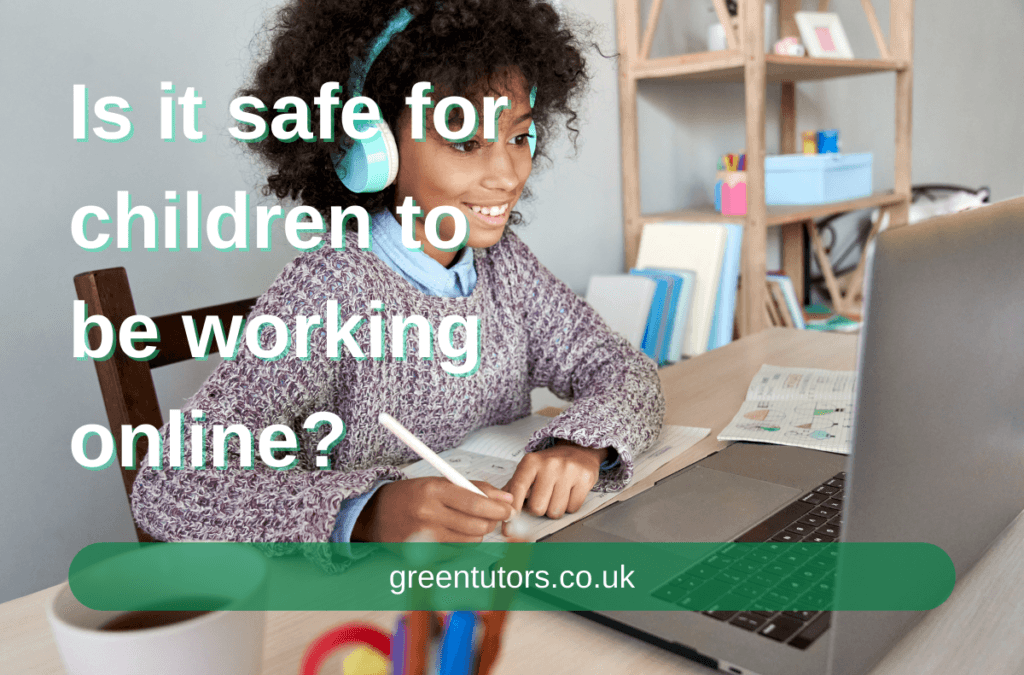
In our current climate, more and more of our interactions are taking place through the internet. And while these platforms have always existed, their rapid growth and uptake in new areas have identified potential problem areas. Parents ask themselves, is it safe for children to be working online?
We’ve all seen the news stories of Zoom-bombing incidents, online grooming gangs, phishing emails, etc. It’s enough to make you join with Fox Mulder and Trust No One.
Parents are (understandably) worried about the prospect of their children having access to the internet and in particular, social media. It gives them ready access to a world that is impossible to control. And I’m sure your own experiences have not always been positive. What proportion of the messages you receive are from people you don’t know? I’m sure we’ve all received some dubious unsolicited messages.
Most adults are savvy enough to identify messages with bad intentions, and hit the block and report options. But that understanding comes from experience, and experiencing this is what we’d like our children to avoid.
There are things that you can do to create a safety buffer for them, and I’d like to share some of these with you here. I’d love to hear from you about your own experiences too.
Online lessons
At some point this year, it is likely that your child has had some of their school resources provided to them online. This has been happening for many years, but again this year has become more widespread.
For this purpose, whatever platforms the schools use, they tend to provide each student with a school login, on their school domain. The student email addresses will have the same domain as the staff email address (the part following the @) to make them easy to identify. This means that their resources can only be accessed by accounts that are part of this domain, and accounts are only provided to students and staff. No one will be able to connect to these resources with a personal email account. This is protective both ways – only approved members are allowed in, and there are no links out.
Why is it important that there are no links out? If your child (or their teachers) have online accounts elsewhere with these same email addresses, it will be possible to find them from those details. Your child might not want their peers and school staff to be able to find them on other platforms, so it is better to use separate details. Additionally, most school staff don’t want their students to see their social media accounts, and certainly shouldn’t encourage the use of those platforms for communication. It is much better to keep them completely separate.
For the same reason, your child should never log in to social media accounts using their school login. Not only does it make that connection again, but it also shows which school they attend. That’s a potential opening for potential catfishing, or other unscrupulous messages. It would be easy to pretend to be a peer reaching out through a faceless platform.
Within Green Tutors, materials are shared with parents directly, and using our own domain, so that parents and students will know that they are talking to their DBS checked tutor.
Learning about online safety
There are so many places that you can go online to learn about keeping children safe online, and to teach your kids about internet safety too. Here are some of the best resources that answer the question, ‘Is it safe for children to be working online?’
This website is all about helping parents to keep their children safe online. There are guides to almost everything you might need to know for working safely online, downloadable checklists, conversation prompts, and also links to lots of great online resources for your child.
This site covers a high level overview of the many aspects of child safety online, as well as some tips on how to prevent, mitigate, and respond to any safety issues. Here are their top tips for video streaming.
Tips for video streaming
1. Talk to your child
Talk to them about what they’re doing online and how they can stay safe. Let them know they can come to you, or another adult they trust if they’re feeling worried or upset by anything they’ve seen online. They can also get support from Childline.
2. Explore apps and sites together
Explore what your child likes to do online together. This can help you to understand why they’re using certain livestreaming or video apps. You can use Net Aware, in partnership with O2, to help you.
3. Agree what’s appropriate together
Agree your own rules as a family when using apps, sites or games. You can use the O2 and NSPCC family agreement template to help get you started.
4. Check your settings
Check the technology your family uses and use privacy and location settings to keep your child safe. You can call your mobile and broadband provider to find out how to do this. Visit our parental controls page to find out more.
Net-Aware
If you’re worried about specific apps or threats online, you can look them up at https://www.net-aware.org.uk/ and find out more about them. Not only does this tell you how safe they are, but also how you can set them up to be as safe as possible, what they are used for, and you can sign up to their mailing list for updates.
It also won the Internet Matters Digital Safety award for the Best Product or Service for Parents.
Most teens are familiar with this site as a place for online revision. I use it with my own students, and even used it when I was preparing for my GCSEs. It’s very up to date, and I’d definitely recommend it. It is a completely one-way platform, so a totally safe way to learn.
It also has a course on eSafety aimed at 11-14 year olds at the link above.
This website is designed for children to access information themselves about the various issues they may face on and offline.
This can be a great approach if you’re concerned about them keeping problems from you, or being embarrassed to talk about things. Teens like to think their parents don’t know everything or understand their problems. I know well that mothers are psychic and know way more than they are told about their children’s lives.
It is certainly good to encourage them to talk to you first, and you can prompt them with a relaxed conversation. But it can be good to help them feel that they’re in control and learn their own coping mechanisms.
This is a fun resource designed to teach children about using the internet safely, but is presented in a fun gaming style. They have to pass ‘levels’ to progress through the game by answering internet safety questions. There’s even a bit of geometry in there for the maths fans.
CyberGhost provides a VPN for secure web browsing. Their privacy hub contains valuable articles on staying safe online, especially this article on how to keep children safe online.
You know your child the best, and you will know how smart they would be in working safely online, and coming to you if anything seems wrong.
This set of top tips to share with children from https://www.safetynetkids.org.uk/ is the best summary advice I’d share to get started with working safely online.
Don’t post any personal information online – like your address, email address or mobile number.
Think carefully before posting pictures or videos of yourself. Once you’ve put a picture of yourself online most people can see it and may be able to download it, it’s not just yours anymore.
Keep your privacy settings as high as possible
Never give out your passwords
Don’t befriend people you don’t know
Don’t meet up with people you’ve met online. Speak to your parent or carer about people suggesting you do
Remember that not everyone online is who they say they are
Think carefully about what you say before you post something online
Respect other people’s views, even if you don’t agree with someone else’s views doesn’t mean you need to be rude
If you see something online that makes you feel uncomfortable, unsafe or worried: leave the website, turn off your computer if you want to and tell a trusted adult immediately.
I hope this helps you to feel more comfortable about working online. When working with a company online, you should always be able to ask any questions you need to about how they improve and ensure the safety of your family, and at Green Tutors we’re happy to be able to put our clients at ease.
Today I’m introducing the newest member of the Green Tutors, team. Kirsten is joining us as a full time A level biology tutor. I’m delighted to welcome Kirsten to the team.
October is ADHD Awareness Month, and a fitting time to talk about how ADHD has shown up in Kirsten’s experiences.
ADHD stands for Attention-Deficit/Hyperactivity Disorder, and is a neurodevelopmental disorder than can impact both adults and children. It is often undiagnosed in girls, and can have an impact on their studies and general life in the meantime. You can learn more about ADHD Awareness Month at https://www.adhdawarenessmonth.org/.
“I have ADHD, and I love fiction – getting deeply invested in and nerding out over stories I like, including talking about them in depth to others who like the same stories. I also like biology and similarly enjoy talking about biology to people who are interested in learning about it, which is why I’m now a biology tutor!”
Kirsten Legg
What qualifications do you have?
A Levels in Biology, Chemistry, Physics, Maths and Further Maths.
First Class BA in Natural Sciences from the University of Cambridge.
PhD in Chromosome and Developmental Biology from the University of Oxford.
Level 3 in Education and Training from Qualified Tutor (well, not quite yet, but getting there! Soon!)
What is your current role?
Full-time A level biology tutor, nothing else!
What did you study to get here?
The aforementioned degrees, but I specifically focused on the cellular/molecular side of biology. My PhD was on DNA repair.
Is this what you always wanted to do?
For a long time, I didn’t really know what I wanted to do, other than something related to my interest in biology. I used to think that the only real way to pursue that was through doing research. It was only when I realised I couldn’t continue in research for the sake of my mental health that I started looking into other options and figured out that tutoring was a much better fit for me.
What kind of student were you at school?
The “gifted” kind.
I was naturally bright enough and interested enough in my subjects that my ADHD didn’t happen to get in the way in school, or even really in university. This was not a good thing in the long run, because it gave me too-high standards for myself and set off a lot of self-esteem issues when I inevitably couldn’t match up to them any longer.
Did you have a tutor?
Only for maths, sort of.
I was a few years ahead in it, so I had one-on-one lessons once a week with one of the school’s maths teachers to teach me the material. This was probably a more fun way to learn maths than the regular classroom way would have been! So at least in that sense, I have experience of how having a tutor can make a subject more engaging.
How did you decide what to study?
I just found biology really cool and intriguing once I got to A level and we started really getting into the cellular/molecular stuff, so I wanted to learn even more about it.
Did you make any mistakes or have any setbacks in your career path?
Yes! A lot!
I did a PhD because I felt like I was supposed to, as if it was the only option for pursuing my interest in science. I ended up struggling massively and burning out, because this was finally a situation in which my undiagnosed ADHD made things difficult for me.
While I managed to complete my PhD in the end, I knew I couldn’t stand to continue in research, so I spent a while not knowing what to do with myself, because most other jobs would be difficult for me in the same kind of way.
I’ve figured out what I want to do now – this, tutoring – but I’m still working on my mental health baggage from all those years of taking the wrong path and failing my own too-high expectations.
What are your top three tips for GCSE students?
Just some general life advice:
It’s okay to not be perfect, to struggle and fail at things and have difficulties that the people around you don’t seem to have.
It’s okay to not know what to do with yourself yet; you’ve got plenty of time to figure it out. Maybe you’ve got the impression that adults know exactly what they’re doing and have their whole lives figured out by their early twenties? That’s all nonsense, actually.
So much of Kirsten’s story resonates with my experiences, and with the struggles I see in my students now. It is common to expect to start perfect. It is the privilege of a tutor to help students to learn to accept and appreciate exactly who they are and what they can achieve.
Kirsten is currently available for online lessons on weekday evenings and weekends. If you would like to arrange biology tuition up to A level with Kirsten, submit your details at https://greentutors.co.uk/request-for-tuition/ and we’ll arrange and introduction. Or you can Book a phone call with me (Georgina) to talk more about what you need.
We use technologies like cookies to store and/or access device information. We do this to improve browsing experience and to show (non-) personalized ads. Consenting to these technologies will allow us to process data such as browsing behavior or unique IDs on this site. Not consenting or withdrawing consent, may adversely affect certain features and functions.
Functional
Always active
The technical storage or access is strictly necessary for the legitimate purpose of enabling the use of a specific service explicitly requested by the subscriber or user, or for the sole purpose of carrying out the transmission of a communication over an electronic communications network.
Preferences
The technical storage or access is necessary for the legitimate purpose of storing preferences that are not requested by the subscriber or user.
Statistics
The technical storage or access that is used exclusively for statistical purposes.The technical storage or access that is used exclusively for anonymous statistical purposes. Without a subpoena, voluntary compliance on the part of your Internet Service Provider, or additional records from a third party, information stored or retrieved for this purpose alone cannot usually be used to identify you.
Marketing
The technical storage or access is required to create user profiles to send advertising, or to track the user on a website or across several websites for similar marketing purposes.





 Green Tutors pay scale




Recent Comments