Today I’m introducing the newest member of the Green Tutors, team. Kirsten is joining us as a full time A level biology tutor. I’m delighted to welcome Kirsten to the team.
October is ADHD Awareness Month, and a fitting time to talk about how ADHD has shown up in Kirsten’s experiences.
ADHD stands for Attention-Deficit/Hyperactivity Disorder, and is a neurodevelopmental disorder than can impact both adults and children. It is often undiagnosed in girls, and can have an impact on their studies and general life in the meantime. You can learn more about ADHD Awareness Month at https://www.adhdawarenessmonth.org/.
“I have ADHD, and I love fiction – getting deeply invested in and nerding out over stories I like, including talking about them in depth to others who like the same stories. I also like biology and similarly enjoy talking about biology to people who are interested in learning about it, which is why I’m now a biology tutor!”
Kirsten Legg
What qualifications do you have?
A Levels in Biology, Chemistry, Physics, Maths and Further Maths.
First Class BA in Natural Sciences from the University of Cambridge.
PhD in Chromosome and Developmental Biology from the University of Oxford.
Level 3 in Education and Training from Qualified Tutor (well, not quite yet, but getting there! Soon!)
What is your current role?
Full-time A level biology tutor, nothing else!
What did you study to get here?
The aforementioned degrees, but I specifically focused on the cellular/molecular side of biology. My PhD was on DNA repair.
Is this what you always wanted to do?
For a long time, I didn’t really know what I wanted to do, other than something related to my interest in biology. I used to think that the only real way to pursue that was through doing research. It was only when I realised I couldn’t continue in research for the sake of my mental health that I started looking into other options and figured out that tutoring was a much better fit for me.
What kind of student were you at school?
The “gifted” kind.
I was naturally bright enough and interested enough in my subjects that my ADHD didn’t happen to get in the way in school, or even really in university. This was not a good thing in the long run, because it gave me too-high standards for myself and set off a lot of self-esteem issues when I inevitably couldn’t match up to them any longer.
Did you have a tutor?
Only for maths, sort of.
I was a few years ahead in it, so I had one-on-one lessons once a week with one of the school’s maths teachers to teach me the material. This was probably a more fun way to learn maths than the regular classroom way would have been! So at least in that sense, I have experience of how having a tutor can make a subject more engaging.
How did you decide what to study?
I just found biology really cool and intriguing once I got to A level and we started really getting into the cellular/molecular stuff, so I wanted to learn even more about it.
Did you make any mistakes or have any setbacks in your career path?
Yes! A lot!
I did a PhD because I felt like I was supposed to, as if it was the only option for pursuing my interest in science. I ended up struggling massively and burning out, because this was finally a situation in which my undiagnosed ADHD made things difficult for me.
While I managed to complete my PhD in the end, I knew I couldn’t stand to continue in research, so I spent a while not knowing what to do with myself, because most other jobs would be difficult for me in the same kind of way.
I’ve figured out what I want to do now – this, tutoring – but I’m still working on my mental health baggage from all those years of taking the wrong path and failing my own too-high expectations.
What are your top three tips for GCSE students?
Just some general life advice:
It’s okay to not be perfect, to struggle and fail at things and have difficulties that the people around you don’t seem to have.
It’s okay to not know what to do with yourself yet; you’ve got plenty of time to figure it out. Maybe you’ve got the impression that adults know exactly what they’re doing and have their whole lives figured out by their early twenties? That’s all nonsense, actually.
So much of Kirsten’s story resonates with my experiences, and with the struggles I see in my students now. It is common to expect to start perfect. It is the privilege of a tutor to help students to learn to accept and appreciate exactly who they are and what they can achieve.
Kirsten is currently available for online lessons on weekday evenings and weekends. If you would like to arrange biology tuition up to A level with Kirsten, submit your details at https://greentutors.co.uk/request-for-tuition/ and we’ll arrange and introduction. Or you can Book a phone call with me (Georgina) to talk more about what you need.
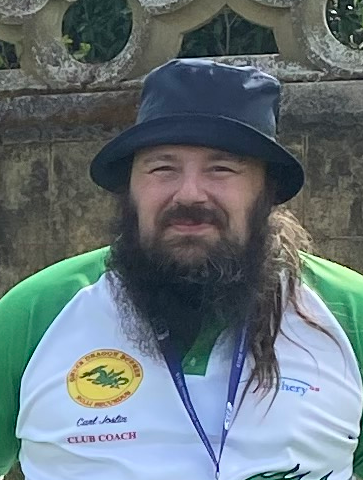
Carl joined the Green Tutors team in 2020 to tutor A level maths, GCSE maths, KS3 maths, and computer science.
Carl is an expert in computer languages having studied a degree in Computer Science. He is also a maths fan, and his degree included a significant amount of mathematics.
Carl has extensive experience in working with children of all ages, both academically and as a senior member of an archery club, of which he is a vice chair.
Carl likes to spend his time supporting others. He won a Special Achievement Award from Millennium Volunteers while at school. Whilst at University he was employed as Student Proctor helping other students with their studies, and as a Visiting Lecturer.
Qualifications BSc in Computer Science – 1st Class Honours
What is your current role? Level 2 Archery Coach, vice chair of an archery club and PhD student
What did you study to get here? PhD (ongoing) at University of Hertfordshire Computer Science Degree at University of Hertfordshire – 1st Class Honours Double A Level in Information Technology
Is this what you always wanted to do? I have always been passionate about computing and my mathematics knowledge stood me in good stead to achieve my 1st Class Honours degree in Computer Science
What kind of student were you at school? Focused and hard working
Did you have a tutor? Yes, my poor health meant that I had several different home tutors who helped me achieve my ambition of going to college and ultimately university, to further my studies.
How did you decide what to study? I was always good at Maths and Computing and wanted to use these as the basis for my career path.
Did you make any mistakes or have any setbacks in your career path? I suffered from poor health which impacted my day-to-day studying and my ability to undertake my chosen career path.
What are your top three tips for GCSE students? 1. Enjoy yourself. 2. It is just as important to know when to take a break as it is to know when to study. 3. You can do it, you just need to work out how to.
Carl is a great example of how students can overcome personal difficulties with a good support network. Carl’s health impacted on his school attendance and development at school, but he was still able to achieve his academic goals with the help of home tutors. He has spent a lot of his time since then giving back to the community through volunteering.
Does it feel like you’re processing a constant to-do list in your mind, from the minute you wake up, until the last minutes (or hours) of the day you spend trying to turn it off and go to sleep.
Walking from one room to another involves picking things up on the way, calling out to your child to find their PE kit, phone in hand scheduling appointments for the weekend, mentally processing a shopping list, noting the handle needs tightening, and the bin needs emptying. Does this sound familiar?
There’s always ONE person in the house whose brain is on that permanent cycle. And that person keeps everyone else going on the right path while they are mentally burdened.
My experience visiting different families each week tells me that 99% of the time this person is the mother.
And that mother will be the one who sought me out, asked me all the questions to make sure I could help her kids, scheduled the appointment with the family’s entire weekly schedule committed to memory, put the appointment on the calendar to make sure everyone knew I was coming, made sure the bill was paid, made me a cup of tea when I arrived, and was there at the end of the lesson to ask how it went.
While my time management tips are generally shared with overwhelmed GCSE students, lets face it – Mum is the one who needs to make time for a gin on the sofa today.
So what can you do about it?
1. Prioritise
Yes, I know. That got your back up. You wouldn’t be doing things if you didn’t really have to.
But most of the time when we absolutely have to make time, like when there’s an emergency, or we break a leg, things don’t get done and it’s OK. So make sure you’re very aware of what your priorities are.
Ultimately, you could drop absolutely everything if you were comfortable with the consequences. But presumably you want a roof over your head and food in your stomach. And you might want the same for your dependents.
Basically, decide what is really important to you. Perhaps you can drop some of the stuff that isn’t.
Take some time now to write out literally everything you have on your mental to-do list. Or maybe you already keep a list somewhere, in which case make sure you’ve done a complete brain dump into it. Get if all out of your head, and all in the same place so you can see it. Marvel at its epic glory. That is not even all that lives in your head at any one moment. It’s now easier to see why we forget where we left the car keys, and put the hairbrush in the freezer!
Pick out from that list the things that are really important to you. Can you put them into some sort of order? Or perhaps highlight them in different colours – top, middle, and bottom priority.
2. Focus
These two are often confused, but they’re not the same. You can put your tasks in order but if you still try to do them all you haven’t saved yourself any effort. Focusing is about letting go of the things that don’t serve you right now.
If something has been on the list forever and doesn’t ever get done, maybe it can just be taken off and forgotten about. If you’ve lived this long without it, do you really need it?
Have you made something really important in your mind when really it isn’t, and it’s just causing you stress? Let it go.
If you struggle to let them go, try writing them down and literally binning the list. Burn it, shred it, whatever you like. But show your mind it’s gone, and it can be forgotten.
3. Deal, delegate, dump
Work through your list now deciding what you can just do in 5 minutes to tick off, what you need to delegate to someone else, and what’s getting added to the burn list to forget about.
I like to schedule a power hour every so often to blast through those 5 minute jobs and shrink the list a bit. It’s very satisfying when you feel overwhelmed and need a boost.
4. Morning and evening routines
I keep seeing these on Instagram, where some health guru has their vitamin rich smoothie at 4am, meditates, reads their motivational book, runs 5 miles, hugs their kids, and then goes off to earn their 7 figure salary.
That’s not what I mean. Those guys did that once, put it on Instagram, and are now trying to live up to it like the rest of us.
But you can build handy habits into your day by ‘linking’ them to something. And the beginning and end of your day are a great place to start.
What are the things you’d like to do each day?
Get enough sleep
Brush your teeth
Floss
Eat breakfast
Take any medication / vitamins
Check your email
Review your schedule
Stretches / physio?
Exercise
Shower
Empty the bins
Wash up
Clean surfaces
Read
Cook
Meal plan / food tracking
Sort the mail
They quickly stack up, right? When are you going to do all of this? It already seems like a full day.
You can do this in the first hour of the day and the final hour of the day by linking them into routines and building good habits.
I would recommend the Fabulous App for this, but you can do it on your own. Decide what you want your routines to look like, and tweak them over time. Go from one thing to the other in the simplest order each day. It becomes habit, and you don’t even think about it.
5. Limit your time cleaning
There are some tasks that will never be finished, and housework is one of them. The phrase ‘A woman’s work is never done’ was coined by some non-feminist who otherwise knew what they were talking about. You could clean for as long as you can clean and you’ll still find something that needs a Hinch. Forget it. Unless you’re Mrs Hinch and you get paid to obsess, don’t! No one cares as much as you do. And actually I bet guests would LOVE that you aren’t perfect so they can relax and be imperfect too.
It’s great to take pride in your home, but preserve your energy for where it better serves you.
My trick is to pick a room a day, set a 20 minute timer, and clean like mad for that 20 minutes. As soon as the timer ends, I’m done. I do that every day and my house stays clean. Now I don’t have a big household so you might set a longer timer, or you might get more people involved in it. Just don’t give it too much of your time.
If you can afford it, get a cleaner. It isn’t extravagant if you have the money. It doesn’t make you a diva and it provides income to someone, and time to you. Why not?
6. Schedule
I could not live without my calendar now. Everything I’m doing goes in there. I know I have that to the extreme, but I’m sure you have some way your organise your appointments at least.
Don’t try to keep it all in your head – that’s how we get the mental overload. Keep a paper diary, or a whiteboard, or a calendar app on your phone. Whatever works for you.
Obviously appointments will go in there. Maybe also for other members of the household. But you can also use this to plan out time for getting things done.
Schedule an hour when the kids are out for your ‘dealing with quick win tasks power hour’.
Make time for yourself, to do something relaxing.
Plan when you’re going to do the big shop – when the shop will not be jammed.
Turn your top priority to do list into your schedule for the week and month ahead, so that you can see things will have time to get done.
But make it realistic. Planning to file your tax return in the morning, jet wash the patio through lunch, and decorate the bathroom in the afternoon is setting yourself up for a crumbling fail. Be kind to future you.
7. Make time for wellbeing
The big mistake we all make is to keep pushing through when we need to rest. If you don’t look after yourself, you will reach a point where your mind will start pushing back and you will struggle. If you ignore it, you will feel it physically. Eventually, you will have to listen. And in extreme cases, you can do real harm.
Resting is not laziness. Everyone needs sleep. Athletes sleep for 9-10 hours a day in order to cope with rigorous training and diet regimes. Sleeping makes you stronger!
But it isn’t just sleep. You need to do things you enjoy. It nourishes your soul.
Take a, walk
Visit a farm
Visit friends and family
Go clothes shopping
Watch a film
Read a book
Go to a craft class
Play an instrument
Take a bath
Light a candle
Call your Mum
Hug someone
Do some gardening
Anything that makes you feel good, without doing harm, will nourish your soul, and you need that regularly.
And there’s one thing you can do right now to take a worry off your mind – message me to see how I can support your child with their exam preparation, and turn GCSE Stress into Exam Success.



Recent Comments