In today’s fast-paced world, efficiency is key. When it comes to learning, spending endless hours revising can be a drain on both time and productivity. But what if there was a way to master the art of efficient learning, allowing you to spend less time revising while still boosting your productivity? Well, you’re in luck. In this article, we will explore proven strategies and techniques that can help you optimize your learning process.
Whether you’re a student preparing for exams, a professional looking to upskill, or simply someone seeking to expand your knowledge base, efficient learning is essential. By implementing the right methods, you can streamline your study sessions and retain information more effectively. We’ll delve into the concept of active learning, where you engage with the material rather than passively absorbing it, as well as explore the importance of setting clear goals and utilizing effective study techniques.
Get ready to revolutionize your approach to learning. Say goodbye to endless hours of mindless revision and hello to a more efficient and productive learning experience. Let’s dive in and discover how you can master the art of efficient learning.
The Importance of Efficient Learning
Whether you’re a student preparing for exams, a professional looking to upskill, or simply someone seeking to expand your knowledge base, efficient learning is essential. By implementing the right methods, you can streamline your study sessions and retain information more effectively.
Common Challenges in Traditional Learning Methods
Traditional learning methods often involve passive reading and memorization, which can be time-consuming and yield limited results. Many individuals struggle with information overload and find it difficult to retain what they’ve learned. Additionally, the pressure to perform well in exams or meet work-related deadlines can add unnecessary stress to the learning process.
Understanding Effective Learning Techniques
To become an efficient learner, it’s crucial to understand and implement effective learning techniques. One such technique is active learning. Instead of passively absorbing information, active learning requires you to engage with the material. This can include activities such as problem-solving, group discussions, and practical applications of knowledge. By actively participating in the learning process, you enhance your understanding and retention of the subject matter.
Time Management for Efficient Learning
Time management plays a pivotal role in efficient learning. By effectively managing your time, you can allocate dedicated study periods and avoid procrastination. Start by creating a schedule that outlines specific study times and breaks. Set realistic goals for each session and prioritize tasks based on their importance and deadlines. Remember to incorporate regular breaks to rest and recharge your mind.
Creating a Focused Study Environment
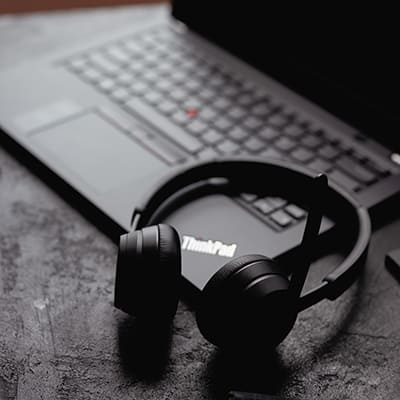
A conducive study environment is essential for efficient learning. Eliminate distractions by finding a quiet space where you can focus without interruptions. Ensure your study area is well-lit and organized, with all necessary materials within reach. Consider using noise-canceling headphones or playing ambient background music to enhance concentration. Additionally, keep your study space clutter-free to minimize distractions and promote clarity of thought.
Utilizing Technology for Efficient Learning
In today’s digital age, technology offers a myriad of tools and resources to aid in efficient learning. Leverage digital platforms such as online courses, educational apps, and virtual study groups to supplement your learning. These tools provide convenience, flexibility, and access to a wealth of information at your fingertips. Explore platforms that align with your learning style and goals, and embrace the benefits of technology to enhance your learning experience.
Effective Note-Taking Strategies
Note-taking is an effective learning strategy that helps consolidate and reinforce information. Instead of mindlessly transcribing everything, adopt a more strategic approach. Focus on capturing key concepts, main ideas, and supporting details. Use techniques such as summarizing, paraphrasing, and visual aids to organize and structure your notes. Experiment with different note-taking methods such as Cornell notes, mind maps, or the SQ3R method to find what works best for you.
Active Learning Techniques
Active learning techniques promote engagement and deep understanding of the material. Incorporate activities such as problem-solving exercises, discussions, and teaching others. Utilize resources such as flashcards, quizzes, and interactive online platforms to interact with the content. Actively seeking opportunities to apply your knowledge in real-life scenarios reinforces learning and improves retention.
Using Spaced Repetition for Long-Term Retention
Spaced repetition is a powerful technique for long-term retention of information. Instead of cramming all your studying into one session, space out your review sessions over time. The concept is based on the idea that revisiting information at spaced intervals strengthens memory retention. Use flashcards, digital apps, or handwritten summaries to review previously learned material. Gradually increase the time intervals between each review session to reinforce your understanding and promote long-term retention.
Conclusion: Implementing Efficient Learning Strategies for Success
Mastering the art of efficient learning is a game-changer. By optimizing your study sessions, implementing active learning techniques, and utilizing technology and effective note-taking strategies, you can spend less time revising and boost your productivity. Remember to prioritize time management, create a focused study environment, and leverage the power of spaced repetition for long-term retention.
With these strategies in your arsenal, you’ll be well-equipped to tackle any learning challenge that comes your way. Embrace the power of efficient learning and unlock your full potential. Say goodbye to endless hours of mindless revision and hello to a more efficient and productive learning experience. Start implementing these strategies today and watch your learning journey transform. Happy learning!
Without having sat GCSEs before, it is difficult for students to know what ‘prepared’ looks like. As time ticks on, the pressure increases, and the best way to reduce it is to take positive action. So here are my tips for some things you can do today and going forward to feel more prepared for GCSEs.
Sleep is one of the most important elements of preparing for exams, but it is so often unappreciated. It is very likely you’re not getting as much sleep as you think you are. I thought I was getting 7 hours of sleep per night until I got a FitBit. Actually tracking my sleep told me it was actually 5 hours.
You don’t have to get a sleep tracker (although data = knowledge = power) but monitor how tired you feel when you wake up. Some of that may be dehydration, and some of it may be due to not getting enough sleep. Keep a drink of water beside your bed and sip from it whenever you wake up. If you feel tired when you wake up and the drink is empty, you’re probably not getting enough sleep.
Remember that teenagers need more sleep than their parents. If you’re all getting up at a similar time, children should go to sleep before their parents. And it doesn’t help to sleep in at the weekend to make up the hours. Consistency is key for effective sleep. Friday lessons should not need to be spent dozing on your pencil case.
While you can usually borrow anything you need to in the exam hall, it is always worth preparing your pencil case ahead of time.
These are the things you’ll need for your exam series:
A clear pencil case
A maths set with a set of metal compasses and a protractor
A good scientific calculator
Pens that are comfortable to write with
Mechanical pencils – no one wants to have a blunt pencil in an exam!
You can purchase all of these items for a low cost at the links below if you don’t already have them but do check what you have first.
I may earn a small amount of commission from purchases you make through links on this site, at no additional cost to you. Your purchases will remain anonymous.
The world of online learning is a very exciting space in 2024. The momentum that started with virtual learning during school closures has grown exponentially in that time. We’re using exciting engagement and visualisation tools in our lessons, and there are an infinite number of digital resources that enable us to see the world from our laptops.
And yet I frequently find myself convincing parents to try their first virtual lesson when they’re adamant they want face to face. And I can understand where this comes from. The parent experience of lockdown and virtual schooling was painful. Zoom fatigue is very real, and the online learning that happened in 2020 was delivered by overstretched tutors with platforms that were being pushed beyond their 2020 capabilities.
If that’s the experience you’re expecting of an online tutoring session, please allow me five minutes to change your mind.
Equality of equipment
In the virtual classroom, each student has access to the same tools. This means that everyone starts on the same footing. All of the tools they need exist within the virtual classroom.
screen sharing
tech tools
free software
They just need the internet/mobile connection. If you are able to provide this, then you are able to provide everything they will ever need to learn.
Location is irrelevant
You can connect with tutors all over the world in the virtual classroom. This means that you can connect with the best tutor for you regardless of location. It also allows your learning experience to include wider perspectives.
There is no travel time required. When your tutor doesn’t have to spend time and money travelling to you, they can use that time and money to deliver a better service for you.
There is also no requirement for you to be there to be there – you can observe with the web link too. Parents spend more than enough time playing taxi and chaperone. You don’t need to do that in the classroom too.
Tech availability
The world of online learning is growing rapidly, which means that the online world has a vast array of tools to offer that you may not currently even be aware of.
Your tutor, working in that world, will have direct access to this, and will likely have the capacity to invest in paid tools that wouldn’t be worthwhile for you to invest in alone.
Lean in to the digital works
Your virtual tutor should be willing to meet with you through the same tools they’ll use to deliver your lessons, and so you will see what the environment will be like for your child before you start.
The virtual classroom does not look like the Zoomageddon you probably experienced through lockdown. A good tutor will deliver an engaging, connected session through their virtual classroom.
Neurodiverse approach
A frequent objection to online tutoring is that it is less accessible for neurodiverse students. That is likely also a perspective that leans back into the experience of school closures and Zoom fatigue. A student with executive function and regulation issues would be truly up against it in a group Teams session with no cameras or mics on. Death by PowerPoint might be something you’re familiar with. I don’t think neurodiversity is the problem so much as the platform, or not using the platform as intended. In a one to one or small group session with a tutor experienced in the virtual classroom it should be a completely different experience.
Are you interested in seeing what the digital classroom looks like? You can schedule a virtual classroom session with me anytime at https://usemotion.com/meet/georgina/meeting.
Being a teenager comes with a fair amount of baggage. I am a big fan of lightening the load wherever possible. And that’s what I aim to do with this blog, but figuratively rather than literally as this blog is all about what you need to fill your bag with to be prepared for study and exams.
Having worked with hundreds of students since 2012 I’ve gotten a very good idea of the tools that help, and the tools that really don’t. Of course there’s always room for things that just add fun, and I’d always recommend a healthy dose of that as long as we’re staying on track for your goals.
The Ultimate GCSE Success Planner
It would be churlish of me not to put at the top of this list my very own guide to GCSE success, published on Amazon. This planner is designed to make the process of exam prep as simple as possible by breaking down the entire year into a step by step process for you to follow. This will tell you exactly what to do at each turn, where to go for help, how to build confidence, manage your wellbeing, and even how to tackle results day. No GCSE student should be without it in 2024.
So now there’s no reason for overwhelm to sneak up on you.
Revision guides
Every GCSE student since forever has used the CGP revision guides to prepare for their exams. They are the absolute best, and I can’t recommend them highly enough. These guys put a lot into delivering an all inclusive revision guide for GCSE students, aligned to a specific curriculum, subject, and level. They understand learning and layout the content in a way that makes it make sense, and makes it stick. I can genuinely still remember pages from the revision guides I used for my own exams, and I have no special powers. They’re just that good (and I have probably used them a good few times).
I’ve collated some of my favourites for the most popular exam specs in this amazon list.
A leak proof, dishwasher friendly water bottle
Hydration plays a big part in focus and mental capacity at school. I remember the days when we weren’t allowed a drink in classrooms, and had to queue up at break time to use the water fountain (bleurgh). Those days are no more, and every student should have a water bottle in their bag.
But no one wants to have a sink full of clunky water bottles at the end of the day because they can’t go in the dishwasher, so make sure you get dishwasher friendly bottles.
And no one wants their drink leaking all over their homework, so make sure it is leak proof. These usually come with some sort of lock to open before drinking that really holds the drink securely when it is in your bag.
This one comes in loads of colours to keep all of the family happy – https://amzn.to/3snByzQ.
A good scientific calculator
All calculators are not created equal. The chances are if you’ve had one in a desk drawer for ten years it won’t be suitable for exams. It needs to include trigonometry functions, powers, roots, and standard form buttons. It is even more helpful if the calculator your child takes into the exams is the calculator they’ve been using in lessons for the year, so that they’re really familiar with it. They’ll also have had time to ask their teacher for help with the functions as they go. Trust me when I tell you their maths teacher will have seen all of the calculator types.
This Casio Classwiz is a popular pick for GCSE student as it has everything they need at a low price.
Mechanical pencils
One of my favourite inventions is the mechanical pencil! No more pencil sharpening’s all over the place. No more frustrating snapped pencils mid-drawing. A mechanical pencil is a permanently sharp and ready to use pencil in your pencil case and in your exams. It’s a nice quick win that I definitely recommend adding to your school purchases.
Index cards
When you think revision, index cards usually follow. They are a really useful tool for revising. Building them builds memory connections that already help you with exam recall, but they’re then a useful prompt tool for quick study on the go. I always recommend these to students, and this set comes with a great storage solution to keep them organised.
Highlighters
Another study staple is a set of highlighters. The simple application of highlighting key terms means that we automatically pay more attention to what we read. It is also a quick way to make notes more accessibly by highlighting key terms and breaking up blocks of text.
All exams come with maths, and having the right tools can make using them a lot easier. Too often I see students struggling to use a compass or a protractor simply because they don’t have a well made one. Plastic compasses are usually not sturdy enough to draw a clean circle, or to use for constructions. This Helix set is tried and tested and is always the one I recommend for my students.
A clear pencil case
Usually clear pencil cases are required for exams. It allows invigilators to see exactly what each student has brought into the exam hall so that they know there is no cheating. You can use a bag for this purpose but it makes sense to buy a fit for all purpose pencil case from the beginning. This sturdy pencil case stands up on the desk so is easy to use in the exams with limited desk space.
Good quality note paper
This is the most overlooked revision resource – paper. Every time I ask my students if they have paper in their lessons the answer is no. I think it is because they are given notebooks for each lesson and it doesn’t occur until they need it that they might write down anything else. I highly recommend having one of these sturdy notebooks in your revision kit. They are rugged enough to survive the school bag and pages can be removed to organise revision notes later. I always use these notebooks now. You can also get square, plain, and graph paper from the same supplier, and they’re great quality.





Recent Comments